Reading
Time: 45 minutes | Content: 6 parts > 32 questions | Marks: 32 points – 25%
Purpose: It checks if you can understand everyday written English.
Each of the 32 questions is worth 1 point.
You need about 23 correct answers (70%) to pass this part of the exam.
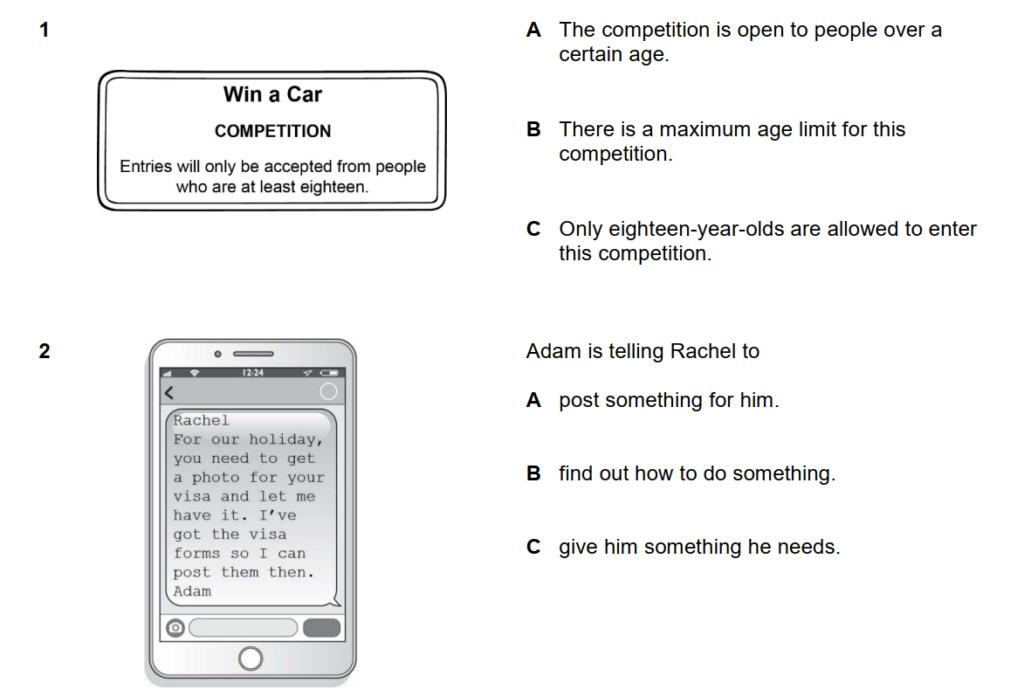
Part 1: Understanding Short Messages (5 questions)
What to do: You will see five short messages (e.g., signs, notes, text messages). For each message, you choose the best answer (A, B, or C).
What it tests: Your ability to understand the main point of very short texts.
Look at each message carefully. Ask yourself: “Who wrote it? Who is it for? What is the main reason for the message?“
Part 2: Matching People to Texts (5 questions)
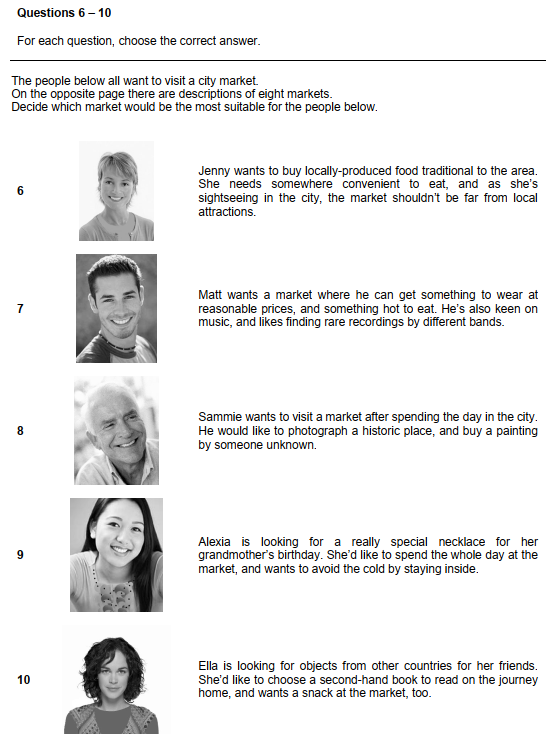
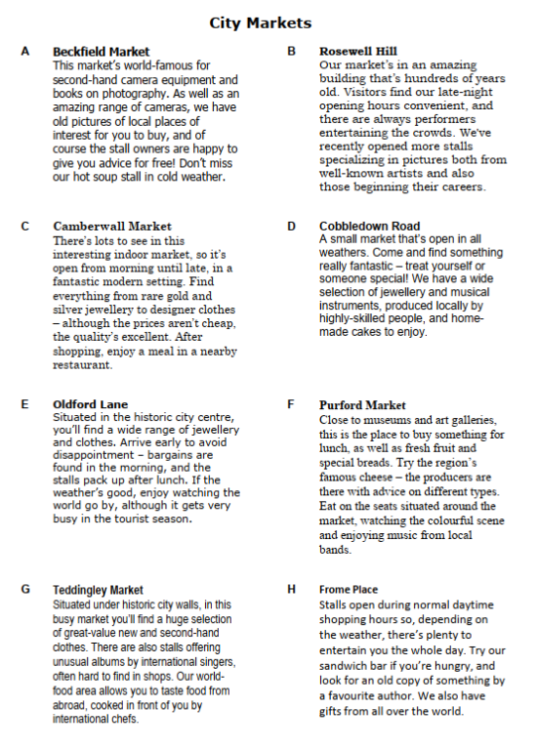
What to do: You read descriptions of 5 people and what they need or want. Then you read 8 short texts (A-H). You match each person to the text that is best for them.
What it tests: Your ability to find specific information and match it to a person’s needs.
First, underline the key words in each person’s description (e.g., “likes quiet places”, “needs a cheap option”). Then look for these ideas in the eight texts.
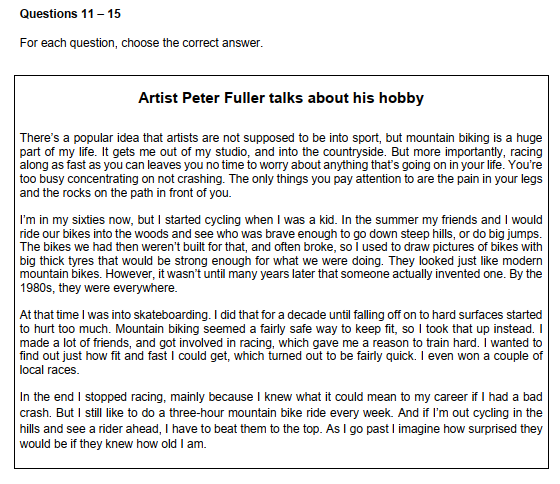
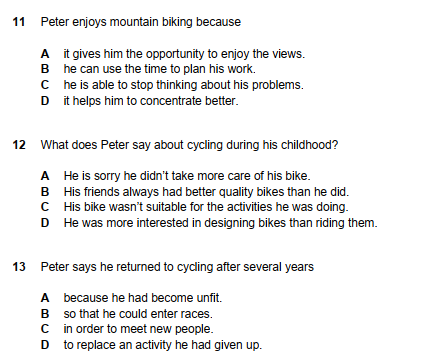
Part 3: Reading a Longer Text (5 questions)
What to do: You read one longer text (e.g., an article, a story). You answer 5 multiple-choice questions (A, B, C, or D) about it.
What it tests: Your understanding of the whole text, including details, opinions, and the writer’s purpose.
Read the questions before you read the text. This way, you know what information to look for. The first and last questions often ask about the general meaning of the text.
Part 4: Choosing the Right Sentence (5 questions)
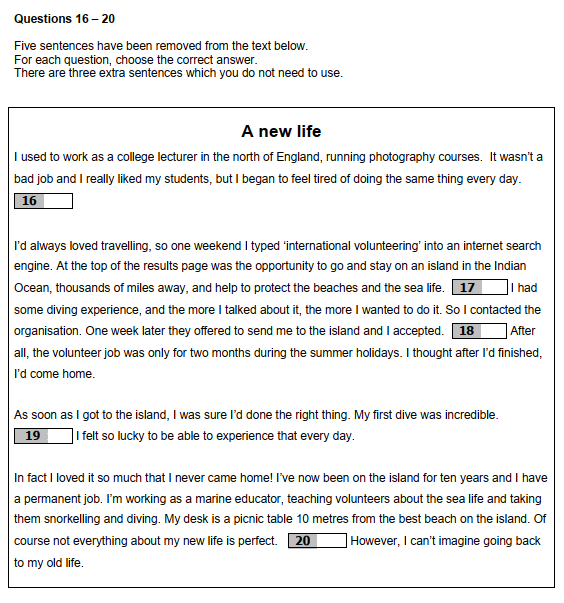
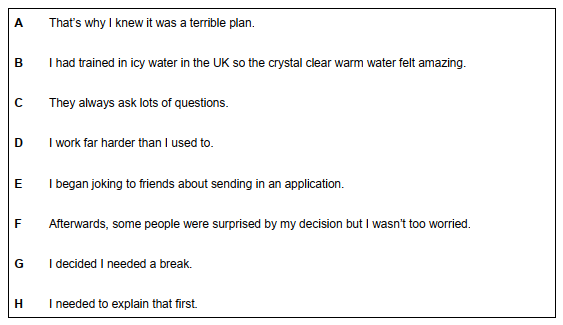
What to do: A text has 5 missing sentences. You choose the correct sentence from a list of 8 options (A-H) to put in each gap.
What it tests: Your understanding of how a text is structured. You need to see how ideas connect.
Look at the sentences before and after the gap. Do pronouns like he, it, or there give you a clue? Does the missing sentence continue an idea or introduce a new one? Three sentences will not be used.
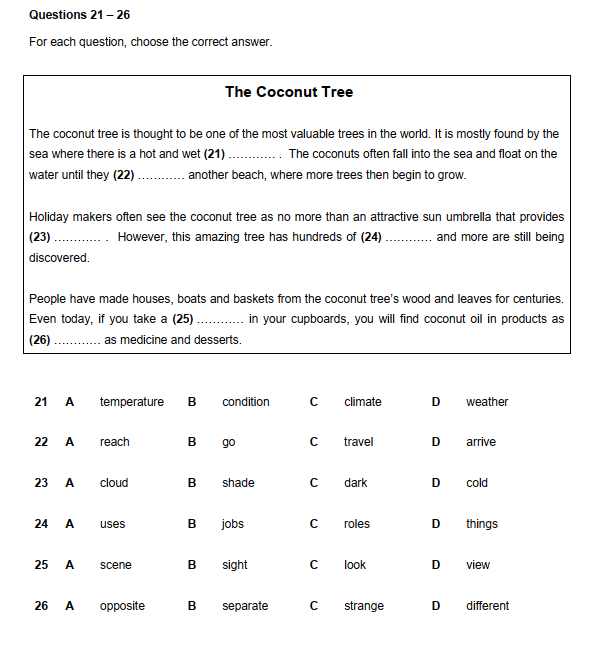
Part 5: Multiple-Choice Cloze (6 questions)
What to do: A short text has 6 gaps. For each gap, you choose the correct word (A, B, C, or D).
What it tests: Your knowledge of vocabulary (words) and grammar (how words go together).
Read the whole text first to understand the story. Look at the words around the gap. Is it testing a common phrase (e.g., depend on), a grammar rule (e.g., present perfect tense), or the meaning of a word?
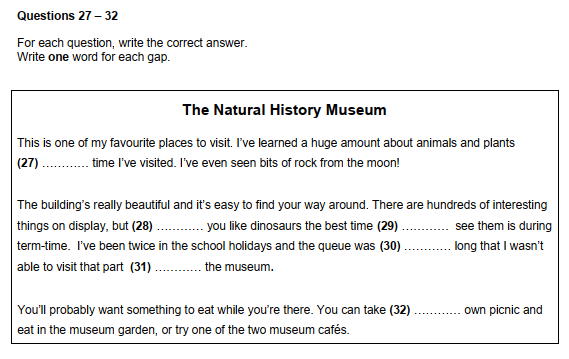
Part 6: Open Cloze = Write the Word (6 questions)
What to do: A short text has 6 gaps. You must write one word in each gap. There are no options to choose from.
What it tests: Your knowledge of grammar and common English words.
The missing words are often small grammar words like articles (a, the), prepositions (in, at, for), pronouns (he, their), linking words (but, because), or auxiliary verbs (is, have, do). Read the sentence carefully. What word is missing to make it correct?
Top Tips to Prepare and Succeed
- Read Often in English: Don’t read very difficult books. Read things you can mostly understand. Try:
- Graded Readers (books written for language learners).
- Simple news articles on websites for learners.
- Information leaflets, brochures, or simple blog posts.
- Practice Smartly in the Exam:
- Underline Key Words: In Parts 2, 3, and 4, underline the important words in the questions and in the text. This helps you find answers faster.
- Don’t Spend Too Long: If a question is very difficult, guess the answer, mark it, and come back later if you have time.
- Check Your Answers: If you finish early, use the time to check your answers, especially in Part 6 (did you write one word?).
- Learn from Everything You Read:
- When you read, write down new, useful words or phrases in a notebook. Review them regularly.
- Watch films or series in English with English subtitles. This helps your reading speed and vocabulary.
- Know the Test: Before your exam date, practice with official practice tests. This is the best way to get used to the format and timing.
Remember: The Reading test is not just about knowing words; it’s about finding information and understanding the main ideas. Practice regularly, and you will be ready.